
Najaf
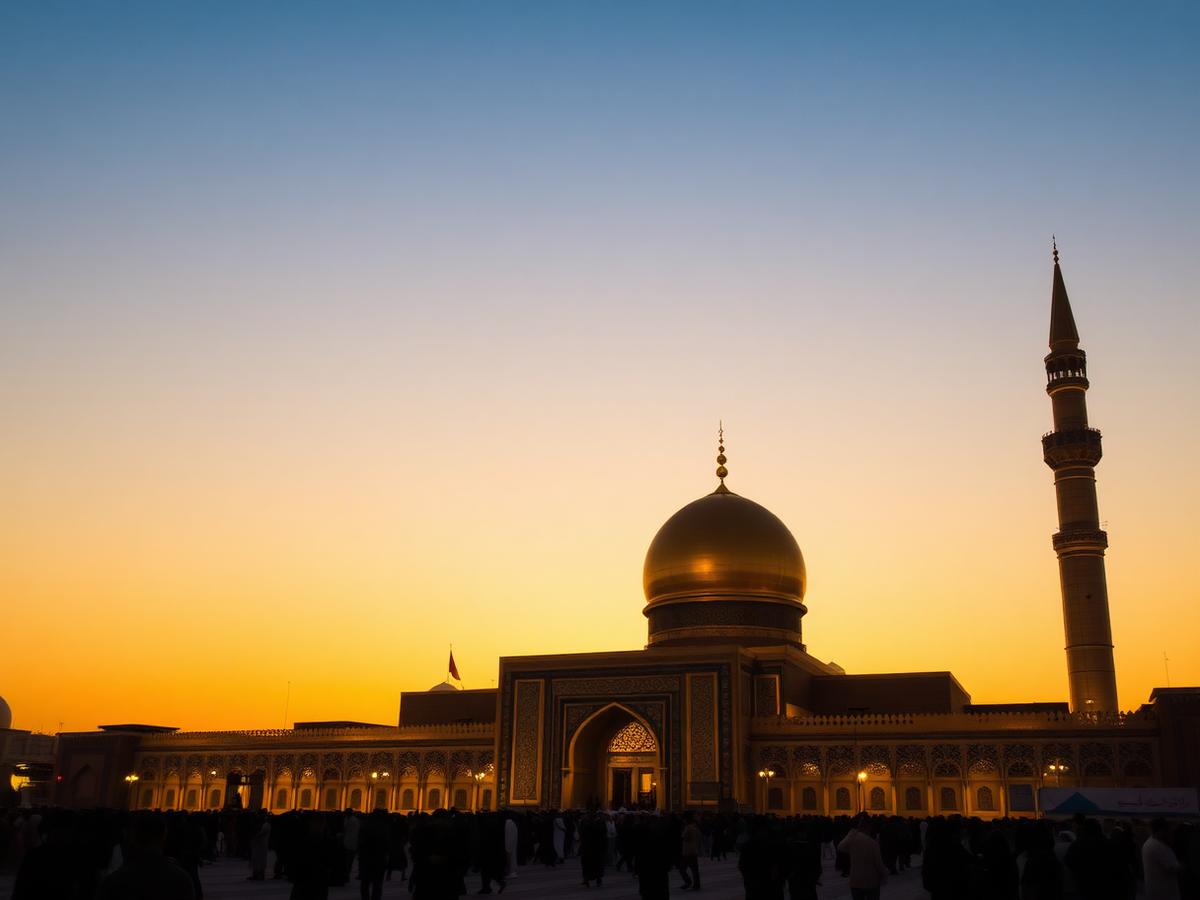
Imam Ali Shrine
The golden-domed resting place of Imam Ali ibn Abi Talib. Best visited at dawn or after Isha prayer.
Iraq is not one pilgrimage — it is many. Tawazun Tourism designs respectful, safe itineraries for Muslim, Christian, Jewish, Mandaean and Yazidi travellers, alongside curious visitors of every background.
A shared land. Iraq is the birthplace of Abraham at Ur, the Babylon of the Jewish exile, the fourth holiest ground of Shia Islam, home to one of the world's oldest Christian communities, and the last surviving heartland of the Mandaean Sabaeans.
Travel with intention. We work with community elders and clergy across faiths so every visit is welcomed rather than intrusive. Tell us your tradition, and we'll shape the route around it.
The golden-domed resting place of Imam Ali ibn Abi Talib. Best visited at dawn or after Isha prayer.
Focal point of Arba'een — the world's largest annual pilgrimage — twinned across a shared courtyard.
Twin golden domes marking the graves of the 7th and 9th Imams. Easy day trip from central Baghdad.
Restored after 2006. Pair with the spiral Minaret of Samarra for a rich day from Baghdad.
A 7th-century cliff-carved Chaldean monastery above the plains, and the traditional tomb of the prophet Nahum in the village below.
Ancient Syriac Catholic and Orthodox churches within the reconstructed Old City, alongside the UNESCO-led revival of Al-Nouri.
Heart of Iraq's largest active Christian quarter — a warm welcome, and the base for Nineveh Plains day trips.
Founded in 363 AD on Mount Alfaf — one of the oldest surviving Christian monasteries in the world.
A shared Jewish and Muslim shrine with Hebrew inscriptions preserved in the walls — the traditional resting place of the prophet.
A recently restored synagogue-shrine, cared for by the local Christian community for centuries.
Walk the reconstructed processional way and Ishtar Gate — the landscape of Psalm 137 and the exile narratives.
The last active synagogue in Baghdad, viewable by appointment through community contacts we can help arrange.
The community's principal riverside temple, where baptism rites are performed in the flowing Tigris on Sundays.
Historic Mandaean silversmith quarters and river temples in Iraq's south — visits can be arranged with community elders.
The reed-boat landscape that has sustained Mandaean ritual life since antiquity — combine with an eco-tourism stay.
The holiest Yazidi site — a serene valley of conical shrines. Visitors enter barefoot and follow local etiquette closely.
The 40-day mourning walk from Najaf to Karbala draws more than 20 million people. Preparation is non-negotiable.
Arrive in Najaf 5–7 days before the 20th of Safar. Book flights months ahead — hotel prices multiply 4–6×.
Free food, water, and rest tents (mawakib) line the entire Najaf–Karbala route. Carry only a light backpack, ID copies, and comfortable broken-in shoes.
Register your embassy contact, share live location with family, and note landmark tent numbers rather than street names.
Avoid the shrine courtyards during peak prayer hours on the final day. Enter/exit from the outer gates; never push against flow.
Bring rehydration salts and a basic first-aid kit. Mobile clinics operate every few kilometres along the route.
Ask before photographing individuals or inside courtyards. Cameras and phones are typically not allowed inside shrine interiors.
Combine Ur (Abraham), Babylon (the exile), Karbala, Al-Qosh and Lalish in a single 10-day journey. Tawazun Tourism will handle permits, guides and community introductions.